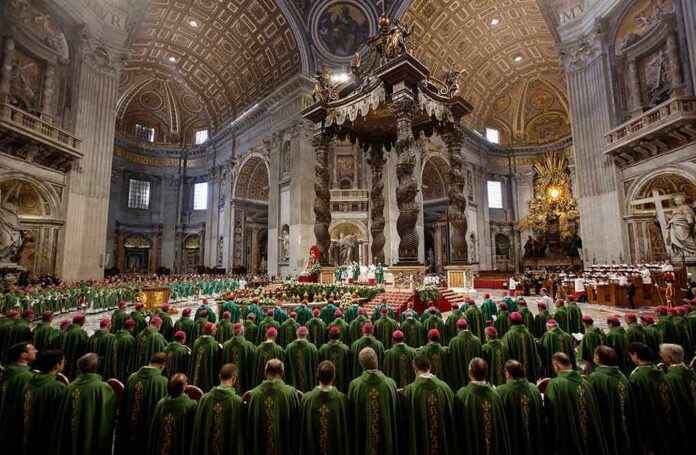
The Vatican confirmed Pope Leo XIV has lung adenocarcinoma after surgeons removed the lower lobe of his right lung.
Story Snapshot
- The Holy See said surgery confirmed lung adenocarcinoma and removed the right lower lung lobe.
- Officials reported the operation was successful and free of complications.
- Pre-surgery scans had flagged a small, localized lung nodule days earlier.
- Key details like tumor stage and margins were not released publicly.
What The Vatican Confirmed After Surgery
The Holy See Press Office said an intraoperative exam confirmed lung adenocarcinoma. Surgeons removed the lower lobe of Pope Leo’s right lung in Rome. The Vatican reported the operation lasted about 90 minutes within a roughly three-hour operating room window. Officials said the procedure was successful and there were no complications. Reports from multiple outlets echoed the same medical bulletin and the stated diagnosis and resection site that day.
Vatican News had announced the plan for admission and surgery at Gemelli Hospital on October 13. The notice outlined an expected hospital recovery of about one week. That timeline explained how the team prepared for careful monitoring after the lobe removal. The public schedule gave a clear picture of where and when care would take place, which helped reduce rumors and set expectations for follow-up updates on the Pope’s condition.
How Doctors Moved From “Nodule” To “Cancer”
Two days before surgery, Pope Leo told the faithful that doctors found a small, well-localized nodule on his lung. He said his doctors recommended action due to the finding. That sequence fits standard practice. Scans can spot a suspicious nodule, but doctors confirm cancer by studying tissue under a microscope after removal. The Vatican said the team’s rapid exam during surgery verified adenocarcinoma, which is a common type of lung cancer.
Medical references explain that final staging depends on pathology details that guide next steps. Size, spread to lymph nodes, and tumor features inform the plan. Those finer points, including margins and lymph node status, were not released by the Vatican. That means the public does not yet know the stage or if more treatment will be needed. Such privacy is common in medical reporting about high-profile patients.
What We Still Do Not Know About Treatment And Prognosis
The Vatican’s update did not detail the tumor’s exact size, lymph-node findings, or whether margins were clear. Those data usually decide whether doctors suggest only surveillance or add care like chemotherapy, targeted therapy, or radiation. Early-stage lung adenocarcinoma can have good outcomes after surgery alone. But the final call depends on the full pathology report, which remains confidential for now, and on the care team’s review after the Pope recovers from surgery.
Pope Leo XIV has been diagnosed with lung cancer after undergoing surgery to remove the lower lobe of his right lung.
The Vatican says the operation was successful, with no complications.
The 71-year-old pontiff is now recovering in hospital as doctors assess the next steps.… pic.twitter.com/1GDAnSYWe8
— 𝐏𝐚𝐧𝐀𝐟𝐫𝐢𝐜𝐚𝐧 𝐈𝐧𝐭𝐞𝐥 (@SankaraDispatch) October 14, 2026
This case also shows how medical news can shift fast. Pre-surgery coverage said the nodule might be benign. Post-surgery, the diagnosis was confirmed as cancer. That change reflects normal clinical steps rather than a contradiction. The Vatican’s control of official medical updates means journalists must rely on its bulletins. Still, the core facts are clear: adenocarcinoma was confirmed, the right lower lobe was removed, and the Pope is recovering after an operation without reported complications.
Sources:
lifesitenews.com, abcnews.com, abc13.com, vaticannews.va, apnews.com, pbs.org, bbc.co.uk, pmc.ncbi.nlm.nih.gov