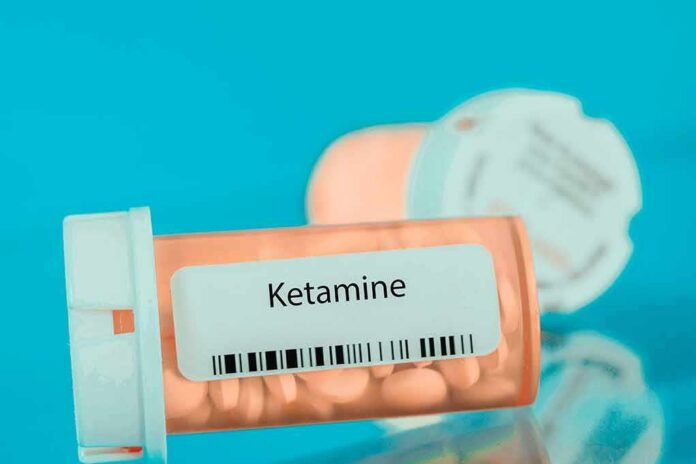
A drug once reserved for horse tranquilizers and hospital operating rooms is now putting British teenagers in diapers because their bladders no longer work.
Quick Take
- Ketamine use among 16- to 59-year-olds in England and Wales nearly doubled from 2014 to 2023, government data shows.
- Children as young as 12 are entering treatment, with under-18 cases needing care for ketamine nearly tripling since 2020.
- Doctors at Alder Hey Children’s Hospital opened the UK’s first youth-focused ketamine clinic after a surge in young patients.
- Chronic use is tied to severe bladder damage, kidney harm, and a condition users call “K-cramps.”
Government Numbers Confirm A Fast-Moving Problem
Britain’s official drug review found that last-year ketamine use among 16- to 59-year-olds in England and Wales rose from 160,000 people in 2014-15 to 299,000 in 2022-23, with younger users driving the increase. That same review found 4.3% of 16- to 24-year-olds reported using the drug in the most recent national survey, a rate far higher than the general population. These aren’t guesses from worried parents. They come straight from government health researchers tracking the drug for years.
School-age numbers tell a similar story. A 2023 survey of more than 13,000 secondary school students across 185 English schools found 11% of 15-year-olds had been offered ketamine at some point. Separate government data shows ketamine use among pupils aged 11 to 15 nearly doubled compared with levels seen between 2010 and 2016. A drug that used to show up mainly at raves and nightclubs is now reaching kids who haven’t finished puberty.
Treatment Centers Are Seeing The Fallout Firsthand
The clearest sign of harm isn’t a survey. It’s who shows up at treatment clinics. In England, the number of under-18s entering drug treatment who named ketamine as one of their problem substances jumped from 335 to 917 between 2020-21 and 2023-24. National treatment data shows the share of young people in substance treatment specifically for ketamine climbed from 1.3% in 2016-17 to 8.4% in 2023-24. That’s not a gradual drift. That’s a spike.
Addiction services describe treating more ketamine users than at any point before. One BBC report described the drug as “once seen as a niche club drug” and now “one of the fastest-growing substances among young adults”. Police in Lancashire say they’ve encountered 12-year-olds already addicted. When law enforcement and emergency doctors start using words like “epidemic” for the same substance, it stops being a subculture story and becomes a public health story.
Bladders And Kidneys Are Paying The Price
Ketamine’s damage isn’t abstract. Regular use scars the bladder lining, shrinking its capacity and causing intense pain users call “K-cramps.” Some lose bladder control entirely. Doctors at Alder Hey Children’s Hospital in Liverpool saw one young ketamine patient in 2023, nine in 2024, and then what staff called “a rapid escalation” in 2025, prompting them to open a dedicated youth clinic in May. That’s a hospital responding to a trend it watched unfold in real time, not reacting to a headline.
The new clinic is believed to be the first in the country built specifically for minors struggling with the drug, with patients as young as 12 needing care. A separate study found children treated for ketamine-related bladder damage had typically used the drug for one to two years before anyone intervened, and many also struggled with other substances. Years of silent damage before a single doctor’s visit is the quiet, dangerous pattern behind these numbers.
Why This Keeps Growing Among The Young
Ketamine’s appeal among teenagers isn’t mysterious. It’s cheap, it’s easy to find, and for a generation already struggling with anxiety and depression, it offers a fast, numbing escape. One recovering user told the BBC the drug helped her “escape my negative thoughts” before she needed treatment herself. That’s the trade parents and doctors are now racing to undo: a quick mental escape for a slow physical collapse.
Britain’s government has responded with public warning campaigns targeting 16- to 24-year-olds and new funding for treatment services. Whether tougher drug classification or more clinics like Alder Hey’s make the bigger difference remains an open debate among officials. What isn’t in question is the direction of the data. More young people are using the drug, more are getting hurt by it, and more hospitals are building programs just to keep up.
For American parents watching this unfold across the Atlantic, the lesson is straightforward. A drug can look recreational and harmless for years before the damage shows up all at once in emergency rooms. Britain’s numbers didn’t spike overnight. They built quietly for a decade until doctors could no longer ignore what they were seeing in their own clinics.
Sources:
youtube.com, bbc.co.uk, bbc.com, assets.publishing.service.gov.uk, gov.uk