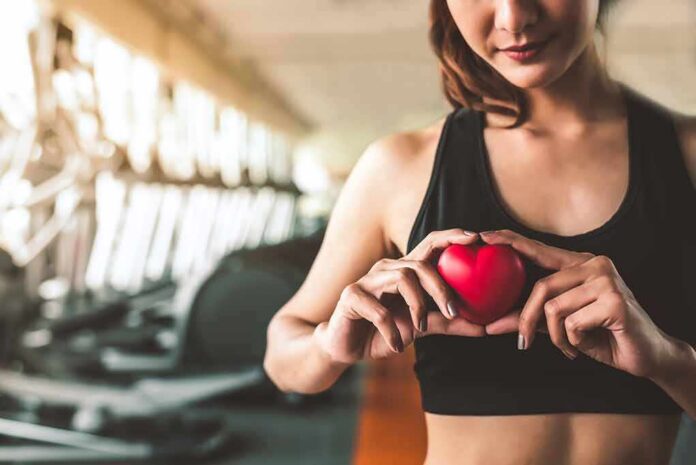
Exercise alone can lower blood pressure and cholesterol after menopause, but new research shows it works even better when paired with flexible, healthy eating habits.
Quick Take
- Multiple large reviews confirm aerobic and resistance exercise improve heart-related markers in postmenopausal women.
- A newer study found combining exercise with flexible healthy eating produced stronger fat-loss results than exercise alone.
- Exercise mainly improves surrogate markers like blood pressure and arterial stiffness, not confirmed drops in heart attacks or strokes.
- Doctors still recommend at least 150 minutes of weekly aerobic activity plus resistance training for women past menopause.
What The Newest Research Actually Found
A 2026 report highlighted by mindbodygreen found something many women suspected all along. Exercise alone helped reduce visceral fat, the dangerous fat that wraps around organs and raises heart disease risk. But the effect got much stronger when women also followed flexible, healthy eating habits instead of exercise by itself. That combination, not one or the other, produced the biggest improvement.
This lines up with what menopause researchers have documented for years. Women lose estrogen’s natural protective effect on blood vessels after menopause, and that shift raises cardiovascular risk quickly. Exercise helps offset some of that loss, but it was never framed as a solo fix. It works best as one half of a two-part strategy alongside diet.
Decades Of Studies Back The Exercise Half Of The Equation
A 2024 systematic review pooling randomized controlled trials found aerobic exercise improved nearly every cardiometabolic marker measured in postmenopausal women, falling short only on a few specific numbers like diastolic blood pressure and blood glucose. Researchers called it a real non-drug option for preventing heart problems in this age group, not just a feel-good habit.
A separate 2022 network meta-analysis reached a similar conclusion, showing exercise improved arterial stiffness, systolic and diastolic blood pressure, and cholesterol numbers including LDL, the so-called bad cholesterol. A 2023 review added that moderate-intensity aerobic or resistance training, done consistently for at least eight weeks, boosted cardiorespiratory fitness, with resistance training specifically building strength.
Blood Vessels Respond To Movement, Not Just Diet
Vascular function, meaning how well blood vessels expand and contract, also improves with exercise. A large 2024 analysis covering 32 studies and more than 1,400 postmenopausal women found significant gains in flow-mediated dilation, a key measure of vessel health, across endurance, interval, resistance, and combined training styles. Arterial stiffness dropped too, regardless of which exercise type participants chose.
An earlier 2017 clinical study reinforced the real-world stakes. Sedentary postmenopausal women who took up organized physical activity saw drops in blood pressure, body mass index, waist-to-hip ratio, and LDL cholesterol. Researchers calculated their estimated 10-year risk of dying from cardiovascular disease fell significantly after the program. That is a meaningful number for women weighing whether a new routine is worth the effort.
Why Pairing Habits Matters More Than Picking One
Cardiologists and menopause specialists increasingly frame exercise as supporting circulation, while resistance training separately protects muscle, metabolism, and bone density during this life stage. Neither piece replaces the other, and neither replaces eating habits. The newest findings suggest treating diet and movement as a package deal produces results that outperform either strategy running solo.
None of this evidence yet proves that exercise alone prevents heart attacks or strokes outright, since most studies track blood pressure, cholesterol, and vessel function rather than actual cardiac events. Still, the consistency across nearly a decade of research gives postmenopausal women a clear, practical takeaway. Move regularly, lift something heavy a few times a week, and keep eating habits flexible rather than rigid.
For women navigating the postmenopausal years, the message is refreshingly simple. Skip the search for a single miracle habit. Combine steady movement with sustainable eating, and the heart benefits compound.
Sources:
mindbodygreen.com, pmc.ncbi.nlm.nih.gov, journals.sagepub.com