
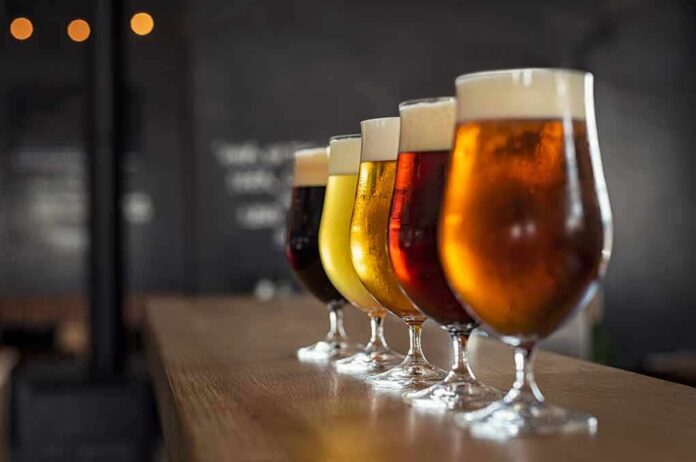
American breweries are betting big that drinkers want less alcohol, not none, and the sales numbers are starting to prove them right.
Story Snapshot
- Global no- and low-alcohol beer volume jumped 13% in 2024 across the world’s ten biggest markets, pulling in millions of new customers.
- United States non-alcoholic beer volume has grown 111% since 2021, with dollar sales up 159% over the same stretch.
- Britain’s low-alcohol beer category doubled in one year, nearly hitting 1.3 million hectolitres in 2024.
- Analysts expect no-alcohol beer to pass ale in worldwide sales volume this year, a milestone few saw coming a decade ago.
A Category Once Dismissed As A Fad Is Now A Growth Engine
No-alcohol and low-alcohol beer used to be a punchline in the beer world. That reputation is gone. Research firm IWSR found volume across the top ten global markets grew 13% in 2024, capping a stretch that recruited 61 million new no-alcohol drinkers between 2022 and 2024. That is not a niche trend anymore. It is a real shift in what people want in their glass.
The numbers get sharper when you zoom into individual countries. Britain’s low-alcohol beer sales doubled year over year, climbing from 650,000 hectolitres in 2023 to nearly 1.3 million in 2024, based on IWSR data shared with the Financial Times. That growth pushed the United Kingdom into the world’s top eight markets for low-alcohol beer, a rank it did not hold before.
American Non-Alcoholic Beer Is Outrunning The Rest Of The Industry
Back home, the Brewers Association tracked something striking. While regular beer sales dipped by low single digits, non-alcoholic beer posted double-digit growth every year for at least four straight years. From 2021 through 2025, volume climbed 111% and dollar sales exploded 159%. That is not a rounding error. That is a category rewriting its own rules while the rest of beer struggles to hold ground.
Industry forecasters see no sign of the momentum slowing. Beverage Daily projects no-alcohol beer will keep growing at a 7% volume compound annual rate through 2028. CNBC reported that IWSR now expects non-alcoholic beer to overtake ale in global sales volume this year, a milestone that would have sounded absurd just a few years back.
Why Breweries See Moderation As The Next Real Market, Not A Passing Trend
The people driving this shift are not casual observers. Younger drinkers are choosing lower-alcohol options at real scale. Innova Market Insights found 27% of Gen Z and 31% of Millennials in the United States and Canada picked lower-alcohol beers in the past year alone. That is a generational habit forming in real time, not a one-off marketing win for a single brand.
Health consciousness is the engine behind the spending. Market researcher Technavio pegged the global low-alcohol beverages market to grow by 332 million dollars between 2024 and 2028, crediting rising health awareness as the main driver. That framing matters. This is not just about avoiding hangovers. It is about consumers actively choosing a lifestyle, and breweries scrambling to meet that demand with better-tasting, better-marketed products than the flat, flavorless “light beer” of decades past.
What This Means For The Shelf At Your Local Store
Expect more shelf space for these products, not less. Heineken’s 0.0 brand posted 14% growth in just the first half of 2024, helping push the global non-alcoholic beer market higher even as overall beverage alcohol volume slipped 1% worldwide. Brands like Michelob Ultra and Corona Premier already lead lower-alcohol shelves in America, and that lineup is only getting longer as major brewers chase the same growth breweries overseas are already cashing in on.
None of this means traditional beer is disappearing. Full-strength lager still dominates total volume worldwide. What it does mean is that America’s brewing industry, long criticized for chasing fads like pumpkin spice stouts and hazy IPAs, has found something with real staying power. Moderation is not a marketing gimmick this time. It is backed by four straight years of double-digit growth, millions of new customers, and a generation of drinkers who simply want a beer without the full buzz.
Sources:
menshealth.com, marketresearchfuture.com, theiwsr.com, morningadvertiser.shorthandstories.com, foodandwine.com, flavordynamics.com