
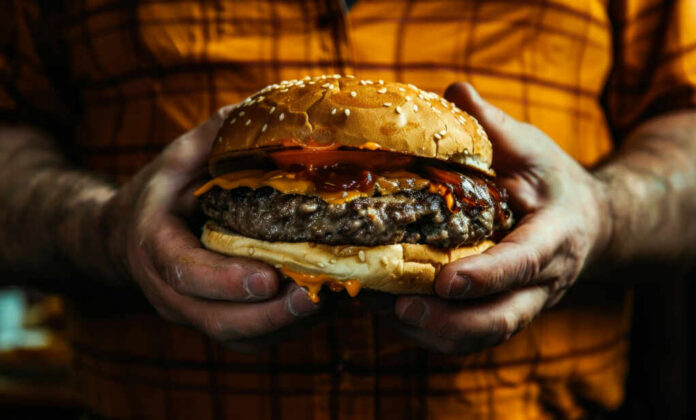
A month-long trial where prediabetic adults ate a hefty serving of beef every single day found no hit to their blood sugar or cardiometabolic health—exactly the opposite of what many headlines have preached for years.
Story Snapshot
- Daily beef matched poultry for blood sugar, insulin function, and inflammation in a randomized crossover trial of adults with prediabetes.
- The trial’s short, 28-day periods cannot answer long-term diabetes-risk questions, but they do challenge blanket “red meat is toxic” narratives.
- Large observational studies still associate higher red meat intake with more diabetes, revealing a clash between trial data and population trends.
- For practical eaters, the real question is not “beef: good or bad?” but “beef compared with what, and for how long?”
What This Beef Study Actually Did, Not What The Headlines Claim
Researchers took 24 adults with prediabetes, most of them overweight or obese, and fed them two tightly controlled diets, each for 28 days: one built around 6–7 ounces of cooked, unprocessed beef per day, the other around a similar amount of poultry. After each period, they measured insulin sensitivity, pancreatic beta-cell function, blood lipids, blood pressure, liver markers, and inflammation. The verdict: no statistically significant differences between beef and poultry on any of those cardiometabolic risk markers. [3]
The team described this as a randomized crossover trial, a design where every participant serves as his or her own control, which sharply reduces the “no two people eat alike” noise that plagues nutrition science. A 28-day washout period sat between the two diet phases to minimize carryover effects. Researchers reported stable lipid panels, blood pressure, and liver markers, and no adverse events of concern. In short, nothing about daily beef looked worse than daily chicken in this short window. [3][8]
Why This Trial Rattles The Usual Red Meat Storyline
Public health messages for years have leaned on observational studies showing that people who eat more red and processed meat tend to have higher fasting glucose, more insulin, and more diabetes. In one major cohort analysis, every additional 100 grams of unprocessed red meat per day tracked with higher fasting glucose and fasting insulin, at least before body weight was fully factored in. Those patterns are exactly what led many clinicians to tell prediabetic patients to “cut the red meat.” [4]
Now a different kind of evidence walks in the door. Under randomized, head-to-head conditions, controlled for calories and macronutrients, unprocessed beef did not worsen glycemic control or inflammatory markers versus poultry over four weeks. That does not erase the observational associations, but it undermines simplistic “red meat automatically wrecks your blood sugar” claims.
Short-Term Safety Signal Versus Long-Term Risk: The Real Tension
Trial authors and neutral reviewers are clear: this is a short-term, modest-size study, not a lifetime clean bill of health for beef. Twenty-eight days of biomarkers tell you whether a food slams your metabolism quickly; they do not tell you what happens after 10 years of poor sleep, zero exercise, and supersized portions layered on top. That is exactly why large cohorts still find that more red meat—especially processed meat—tracks with more diabetes and higher fasting glucose over time. [4]
Body fat, overall calorie excess, and what beef replaces in the diet matter enormously. When beef displaces refined starches or ultra-processed junk, the net effect may be neutral or even helpful. When it piles on top of a sedentary, high-calorie, high-sugar pattern, it might magnify trouble. Current evidence says the crossover trial proves this much and no more: in adults with prediabetes, a month of daily unprocessed beef, in the context of a structured, healthy diet, does not look worse for core cardiometabolic markers than an otherwise similar poultry-based diet. [3][8]
How This Fits With Other Trials And Future Research
This is not the only controlled trial hinting that lean or unprocessed beef may be less metabolically sinister than many assume. Prior randomized work and a 2023 meta-analysis of such trials reported no adverse effects of red meat on a range of blood markers tied to type 2 diabetes when portions were reasonable and overall diet quality was sound. A new ongoing trial is even testing a “healthy beef-centric” diet versus a standard healthy United States–style pattern in people with metabolic syndrome and prediabetes.
At the same time, the meat-and-diabetes question remains unsettled. The observational record still suggests that people who steadily ratchet up red and processed meat intake over years see more diabetes. The randomized trial record, so far, mostly says modest servings of lean or unprocessed beef inside a sane diet do not blow up short-term biomarkers. The most grounded stance is not hero worship of beef or blanket condemnation, but proportional caution: keep portions reasonable, watch processed meat, and focus on the whole pattern, not a single villain. [4][5][7]
Sources:
[3] Web – Surprising study finds beef doesn’t worsen blood sugar or diabetes …
[4] Web – Consumption of meat is associated with higher fasting glucose and …
[5] Web – Does consuming more lean unprocessed beef influence type 2 …
[7] Web – Red Meat and Blood Sugar Levels: What the Evidence Really Shows
[8] Web – New Clinical Trial Demonstrates that Eating Beef Each Day Does …