
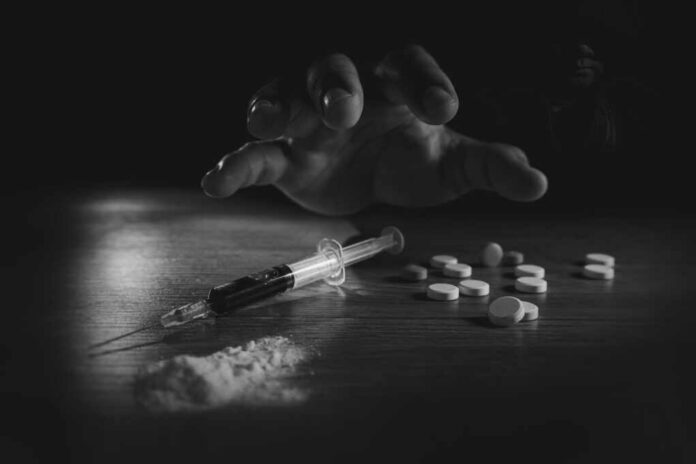
The most unsettling finding in this field is that HIV may not just be the tragic outcome of methamphetamine use, but also a quiet biological accomplice pulling some people back toward the drug.
Story Snapshot
- Meth use sharply increases HIV risk through extreme sexual disinhibition, needle sharing, and treatment gaps.
- HIV infection and its inflammation may, in turn, increase the odds that some men start or relapse to meth.
- Biology, behavior, and broken social structures interact, not just personal “bad choices.”
- Policy that ignores this two-way street risks wasting money and lives on half‑solutions.
How methamphetamine use supercharges HIV risk
Researchers first sounded the alarm on methamphetamine because of what it does to behavior long before the lab work caught up. Clinics working with men who have sex with men reported that meth users showed dramatically higher rates of HIV infection, sexually transmitted diseases, and needle sharing than non‑users. One Los Angeles County study found a stark stepwise pattern: as meth use went from “weekend warrior” to outpatient treatment to residential dependence, HIV prevalence climbed from roughly 40 percent to a stunning 86 percent in inpatient programs.[3] Federal and local public‑health documents have echoed the same mechanisms for years: methamphetamine raises libido, erases inhibition, and keeps people awake for “marathon” sex, often with multiple partners and no condoms.[3][5][6] On the injection side, sharing syringes spreads not only HIV but also hepatitis B and C.[7]
That behavioral picture only covers half the damage. Methamphetamine also appears to worsen HIV disease once a person is infected. Reviews of clinical and basic science studies report that meth use is associated with higher viral loads, faster CD4 cell decline, and more rapid progression to acquired immune deficiency syndrome.[1][2][3] Some of this comes from simple but devastating realities: people high for days miss doses of antiretroviral medication, fall out of care, or abandon clinic appointments.[1][3] But even when researchers adjust for adherence, stimulant‑using patients show higher viral loads than non‑users, suggesting direct effects on immune function and viral replication.[1] Methamphetamine can act as an immunosuppressant, alter how HIV gets into cells, and amplify the virus’s ability to damage the brain.[1][2][3] Taken together, meth does not just increase the odds of catching HIV; it also helps the virus hit harder and faster once it is inside the body.
Flipping the script: HIV biology feeding back into meth use
For decades, most research ran one way: methamphetamine use leads to HIV. Emerging work now proposes a harder question: can HIV itself, through its biology and its diagnosis, increase the risk that some people start or escalate meth use? Recent studies of sexual and gender minority men suggest this is not just a theoretical worry.[2][3] People living with HIV often experience chronic systemic inflammation, including in brain regions linked to reward and motivation.[2][3] One team of investigators has argued that this inflammation may disrupt dopamine pathways, the same reward circuitry that methamphetamine hijacks.[2][3] Their data indicate that higher inflammation markers in men with HIV predicted greater odds of initiating meth use later on, raising the possibility that the virus’s biological footprint nudges vulnerable individuals toward stimulants. At the same time, receiving an HIV diagnosis is a profound psychological shock. Depression, stigma, and social isolation can drive self‑medication with powerful drugs. News reports highlighting this research quote scientists who warn that people living with HIV, already dealing with inflammation‑linked changes in brain chemistry, may find meth’s intense and immediate dopamine surge especially compelling.[3] This does not absolve personal responsibility, but it does challenge the simplistic narrative that every relapse is just a “bad choice” in a moral vacuum.
Multilevel studies now funded at major universities explicitly try to map this two‑way street. One large project led by Dr. Adam Carrico and colleagues focuses on gay and bisexual men, aiming to understand how methamphetamine both increases HIV incidence and interacts with HIV‑related inflammation, mental health, and neighborhood conditions.[5] Their approach treats behavior, biology, and social structure as intertwined. An individual living with HIV and chronic inflammation may be more sensitive to meth’s dopamine jolt.[2][3] That same person might live in a community with heavy drug marketing, weak economic opportunity, and limited access to culturally competent care.[4][5] Add in stigma from family, churches, or workplaces, and meth can start to look less like a random vice and more like a predictable, if tragic, path of least resistance.
What the evidence supports, what remains uncertain, and why it matters
On the scale of evidence, the meth‑to‑HIV direction remains far better documented than the HIV‑to‑meth path. Large epidemiological studies, public‑health reports, and clinical data all converge to show that meth use roughly doubles HIV acquisition risk among men who have sex with men and magnifies disease progression among those already infected.[1][3][5][7] By contrast, the idea that HIV inflammation or diagnosis raises meth initiation risk rests on newer, smaller studies that, while carefully conducted, still need replication and longer follow‑up.[2][3] Some neuroimaging and clinical projects find strong interactions between meth use and HIV in brain connectivity and cognition, while others see additive but not synergistic effects.[4][6] That mixed picture cautions against claiming a fully proven bidirectional loop, but it does justify serious investigation and targeted prevention.
When scientists talk about “flipping the script” on meth and HIV, they are not rewriting the story so much as widening the lens. Methamphetamine still acts as a powerful accelerator of HIV spread and progression; the data on that are overwhelming.[1][3][5][7] The emerging twist is that HIV may sometimes push back, shaping brain chemistry, mood, and circumstances in ways that make meth more tempting, especially for people already under social and economic strain.[2][3][5] For readers who care about order, responsibility, and limited but effective government, this should sharpen, not soften, concern. A society that shrugs at hard drugs, tolerates decaying neighborhoods, and treats chronic infection as inevitable invites precisely the vicious cycles researchers now document. Breaking those cycles requires the same thing that good science does: facing the full complexity, then acting decisively instead of clinging to comforting half‑truths.
Sources:
[1] Web – Associations between Methamphetamine Use and HIV among Men …
[2] Web – HIV, inflammation, and initiation of methamphetamine use in … – PNAS
[3] Web – HIV Diagnosis Linked to Higher Risk of Meth Use in Gay and …
[4] Web – [PDF] METHAMPHETAMINE and HIV – Ryan White HIV/AIDS Program
[5] Web – [PDF] Methamphetamine Use and Risk for HIV/AIDS – GovInfo
[6] Web – [PDF] The link between Crystal Meth and HIV – DC Health
[7] Web – Methamphetamine: medical implications, HIV & Hepatitis – NATAP