
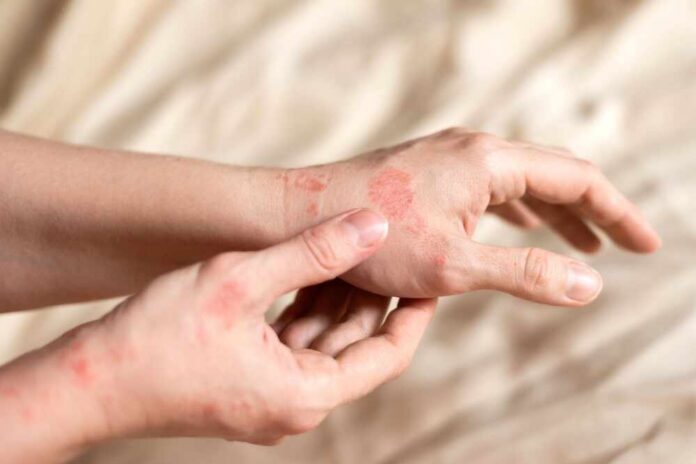
Scientists have finally traced the exact neural pathway that sends your stress straight to your skin, turning upcoming deadlines into itchy, inflamed disasters.
Story Snapshot
- Researchers at Fudan University mapped specific neurons that transmit psychological stress signals directly to skin tissue, causing eczema flares.
- The study analyzed 51 patients and used mouse models to identify Pdyn+ sympathetic neurons as the biological messengers triggering inflammation.
- Blocking this newly discovered pathway prevented stress-induced flares in laboratory models, opening doors for targeted treatments.
- The findings validate decades of patient reports linking deadlines and anxiety to sudden skin eruptions with cellular-level evidence.
The Neural Hotline Between Your Brain and Your Skin
The research team at Fudan University identified Pdyn+ sympathetic neurons as the direct communication line between your stressed-out brain and your angry skin. These specialized nerve cells transmit stress signals through beta-2 adrenergic receptors, recruiting immune cells called eosinophils via a chemical messenger system involving CCL11 and CCR3 signaling. When researchers blocked these neurons in mouse models, stress-induced flares stopped completely. Published in Science on March 20, 2026, this discovery transforms what was once dismissed as psychosomatic complaints into documented biological reality with precise molecular coordinates.
Why Your Skin Picks the Worst Possible Moments
Every eczema patient knows the pattern: big presentation tomorrow, wedding next week, important interview coming up, and suddenly your skin erupts like a vengeful volcano. The sympathetic nervous system, designed for fight-or-flight responses, doesn’t distinguish between actual danger and looming deadlines. When activated by psychological stress, it releases cortisol that weakens your skin’s protective barrier, making it permeable to irritants. Simultaneously, the Pdyn+ neurons fire up, magnetically pulling eosinophils to inflamed areas and intensifying the damage. This creates a vicious cycle where stress causes flares, flares cause more stress, and the whole miserable loop accelerates.
From Mouse Models to Human Hope
The Fudan researchers combined retrospective analysis of 51 atopic dermatitis patients with controlled mouse experiments using genetic ablation and optogenetic activation techniques. They confirmed that eliminating Pdyn+ neurons or blocking eosinophil recruitment through the CCL11-CCR3 pathway prevented stress-induced inflammation. The precision of this mechanism distinguishes it from decades of general observations about stress worsening skin conditions. Previous research established that the hypothalamic-pituitary-adrenal axis and neuroendocrine mediators played roles in inflammation, but scientists lacked specificity about the exact neural route. This study draws the complete map, though human clinical validation remains the necessary next step.
The Dermatology World Gets a New Target
Pharmaceutical companies and dermatologists now have a specific biological target for developing treatments that interrupt stress signals without broad systemic effects. Current eczema therapies typically suppress the entire immune system or focus on barrier repair after damage occurs. Drugs targeting Pdyn+ neurons or the CCL11-CCR3 signaling pathway could prevent flares before they start, particularly in patients who can predict stressful periods. The wellness industry has seized on these findings to promote stress management techniques, meditation protocols, and nervous system regulation as evidence-based interventions rather than alternative medicine platitudes. Adaptogens and mindfulness apps suddenly have peer-reviewed molecular justification for their marketing claims.
What This Means for Your Next Deadline
The immediate clinical implication involves integrating stress management into standard eczema care protocols. Researchers emphasized that calming the nervous system through sleep optimization, meditation, or other relaxation techniques represents an underused strategy alongside conventional therapies. For millions of eczema sufferers worldwide, and potentially those with psoriasis and rosacea, the study destigmatizes flares as purely biological responses rather than personal failures to manage anxiety. Cost savings could emerge from non-pharmaceutical interventions that prevent flares rather than treating established inflammation. The gut-skin-brain axis research aligns with these findings, suggesting microbiome shifts during stress may compound the neural pathway effects through additional inflammatory mechanisms.
The Caveats Science Always Brings
Mouse models provide controlled experimental conditions that human studies cannot ethically replicate, but translation to human biology requires caution. The patient data from 51 individuals showed correlations between stress and eosinophil accumulation, yet this remains associative rather than causative proof in humans. Blocking Pdyn+ neurons worked perfectly in laboratory mice, but human nervous systems involve additional complexity that could modify outcomes. Researchers acknowledge these limitations while emphasizing the strength of the mechanistic evidence. The bidirectional relationship between stress and skin inflammation means flares themselves trigger anxiety, potentially activating the same neural pathway in a self-reinforcing spiral that complicates treatment approaches focused solely on the brain-to-skin direction.
Sources:
Skin Flaring Up Before A Big Deadline? Science Finally Knows Why – mindbodygreen
Scientists Link Stress to Eczema Flare-Ups – Neuroscience News
Scientists Link Stress to Eczema Flare-Ups – Mirage News
Why Does Your Skin Flare Up at the Worst Times? – London Dermatology Centre
What’s the Connection Between Stress and Eczema Flares? – Clear Creek Dermatology
Stress and Skin Inflammation Research – PMC
The Hidden Impact of Stress on Your Skin – Penn Derm Specialists
Stress May Be Getting to Your Skin – Harvard Health