
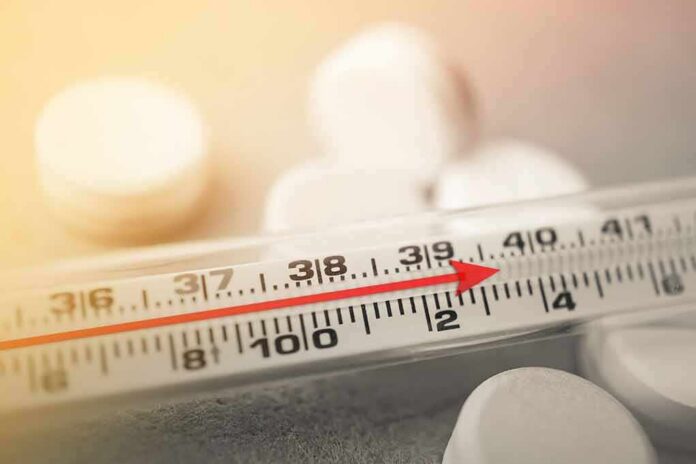
A major study says the average human body is running almost a full degree cooler than the famous 98.6°F number doctors have used for over 150 years.
Story Snapshot
- A 2020 study in the journal eLife found body temperature has dropped steadily since the 1860s.
- Researchers studied over 677,000 temperature readings from three different time periods.
- Major clinics like Mayo and Cleveland still use 98.6°F as their standard reference point.
- Experts say the drop may come from less disease, better sanitation, and modern medicine.
- The study only covers Americans, so no one knows yet if this is happening worldwide.
A Long-Running Number Gets a Fresh Look
For more than 150 years, doctors have told patients that 98.6°F is normal. That number came from a German doctor named Carl Wunderlich, who measured thousands of patients back in the 1850s. New research now says that number may no longer match how warm the average body actually runs today.
Researchers from Stanford University published the study in the journal eLife in January 2020. They looked at three separate groups of people across different eras: Union Army veterans measured between 1860 and 1940, a national health survey from the 1970s, and modern patients treated at Stanford between 2007 and 2017.
What the Data Actually Showed
The study pulled together 677,423 temperature readings spanning roughly 157 years, from military records, pension files, national surveys, and modern hospital charts. After adjusting for age, height, and weight, the researchers found temperatures dropped by about 0.05°F with each new birth decade.
The drop showed up in both men and women, which matters because it means the trend is not just tied to one sex. Men born between 1800 and 1997 saw temperatures fall by over a full degree Fahrenheit. Women saw a smaller but still real decline over roughly the same span.
Why Bodies Might Be Running Cooler
Scientists have a few guesses for why this might be happening, though none are proven. Better sanitation, vaccines, antibiotics, and fewer chronic infections may mean bodies spend less energy fighting illness. Central heating and air conditioning, along with changes in how much people move and eat, could also play a role.
None of these explanations have been tested directly against each other. The study shows a pattern over time, but it cannot say for certain which factor, or combination of factors, actually caused body temperatures to fall.
Where the Evidence Falls Short
The study only looked at people in the United States. That means it cannot prove the same drop happened everywhere else in the world. It also combined very different kinds of records, from Civil War-era thermometers to modern electronic hospital devices, which makes exact comparisons harder.
The study describes an average across huge groups of people. It does not mean every single person’s normal temperature should suddenly shift down. Individual temperature still depends on age, time of day, activity level, and how it gets measured.
Doctors Have Not Thrown Out the Old Number
Despite the new research, major medical groups have not dropped 98.6°F as their reference point. The Mayo Clinic still lists it as the average, while noting that a normal range can run from 97°F to 99°F or higher. The Cleveland Clinic gives similar guidance and says most doctors still use 100.4°F, taken orally, as the actual line for a fever.
A government-backed medical reference also still describes about 98.6°F as the normal human temperature, while explaining that sleep cycles, hormones, and activity cause natural swings throughout the day. That reference states clearly that no single cutoff number can perfectly define a fever for every person.
A Familiar Pattern in Medicine
This is not the first time a long-trusted medical number has come under question. Similar debates have played out over so-called normal blood pressure, cholesterol levels, and body weight standards. Older benchmarks, often set decades ago with limited tools, keep getting challenged as new data and better instruments pile up.
For now, the real takeaway is not that 98.6°F is wrong, but that it was never as fixed as it sounded. Scientists agree more research is needed, especially outside the United States, before anyone rewrites the number printed on thermometers and taught in schools.
Sources:
youtube.com, med.stanford.edu, elifesciences.org, stanmed.stanford.edu, nytimes.com, spokesman.com, mayoclinic.org