
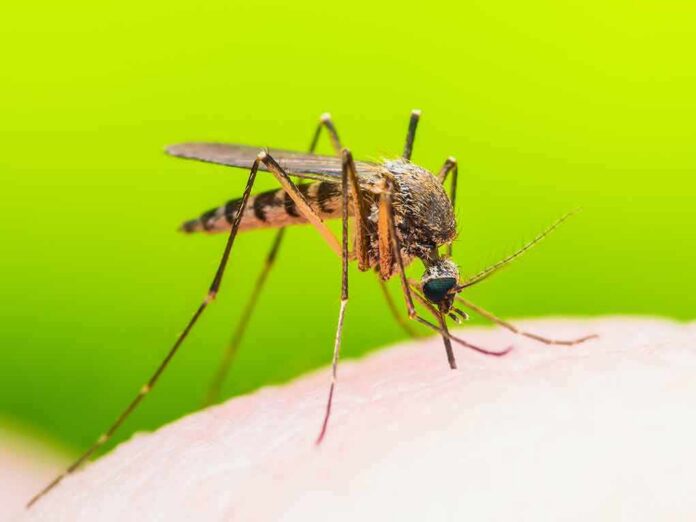
Malaria has outlasted every single-tool solution thrown at it for a century, which is why a 26% drop in infections from a monthly pill matters far beyond the number itself — it opens a new front against the mosquito rather than just the parasite.
Key Points
- A cluster-randomized trial in Kwale, Kenya found that children given monthly ivermectin had a 26% lower incidence of malaria than those given albendazole, the comparator drug.
- The trial enrolled nearly 29,000 people across 84 clusters and met the World Health Organization’s own proposed threshold for a meaningful vector-control effect.
- No significant safety concerns emerged in serious adverse events, though minor side effects were somewhat more common in the ivermectin group.
- The finding is a single trial, not yet a WHO recommendation — global health bodies typically wait for a second confirmatory study before changing guidance.
- The mechanism is old news to entomologists: ivermectin doesn’t just kill parasites in humans, it can make human blood lethal to the mosquitoes that bite treated people.
What the Kenya Trial Actually Found
Researchers from KEMRI-Wellcome Trust and the Barcelona Institute for Global Health (ISGlobal), working under the BOHEMIA program, ran a cluster-randomized trial in Kwale County, a stretch of coastal Kenya where malaria is holoendemic and bed-net use is already high. Nearly 29,000 people across 84 village clusters were randomized so that entire communities, not just individuals, received either ivermectin or albendazole for three consecutive days each month, for three months. Six months after the first round, children aged 5 to 15 in the ivermectin arm had a 26% lower incidence of malaria infection than those in the albendazole arm — an adjusted incidence rate ratio of 0.74, published in the New England Journal of Medicine.
That result is not a rounding-error signal buried in noise. It cleared, by the researchers’ own account, “the WHO-proposed minimally required criterion of at least a 20% reduction in the incidence of infection that lasts for at least 1 month after the completion of a single round of treatment”. Independent science reporting called it the first large-scale, high-quality demonstration that ivermectin can meaningfully suppress malaria transmission at the community level, not merely in a lab dish or a small pilot. Multiple outlets, from CIDRAP to Nature’s news desk to Spanish wire service EFE, converged on the identical 26% figure and the identical Kwale setting, which is the kind of cross-source consistency that guards against a single misquoted press release distorting the record.
Why a Drug for Worms and River Blindness Kills Mosquitoes Too
Ivermectin has been a workhorse antiparasitic since the late 1970s, best known for controlling river blindness and intestinal worms across the developing world — one of the great, and cheaply distributed, public-health success stories of the last half-century. What makes it relevant to malaria is a side effect: the drug lingers in human blood at concentrations that are toxic to insects, including the Anopheles mosquitoes that transmit malaria. A mosquito that bites a person recently dosed with ivermectin can die before it lives long enough to transmit the parasite to someone else. Science described the approach plainly — a widely available, inexpensive drug that turns human blood into a hazard for the insect vector rather than treating the disease after infection. That is a genuinely different strategy than bed nets or antimalarial drugs, which work by blocking a bite or killing the parasite inside a human host; ivermectin instead thins the mosquito population that would otherwise keep the transmission cycle running.
This is also not a brand-new idea. Earlier, smaller trials — including one in Burkina Faso that found a 20% reduction in children under five — had already hinted at the effect. But a prior systematic review of that thinner evidence base concluded researchers were “uncertain” whether community ivermectin distribution affected malaria transmission at all, citing very low-certainty evidence, particularly in young children. The Kenya trial is the first result substantial enough, in sample size and design, to move that uncertainty meaningfully toward confidence.
Where the Real Caveats Sit — and Where They Don’t
The honest caveats here are about pace and scope, not about whether the Kenya result is real. The trial compared ivermectin against albendazole rather than a placebo, which means the reported 26% reflects a comparison between two active drugs rather than drug versus nothing — a design choice that complicates, but does not undermine, the size of the incremental benefit. Effect size also varied by geography: Nature’s coverage noted the protective effect was strongest in Kwale and notably smaller in Mopeia, Mozambique, a companion BOHEMIA trial site, underscoring that transmission ecology and existing bed-net saturation shape how much added benefit ivermectin delivers. And the published follow-up window runs six months past the first treatment round, so questions about whether repeated seasonal dosing sustains — or compounds — that protection over multiple years remain open rather than answered.
On safety, the trial reported no significant difference in serious adverse events between arms, and investigators stated plainly that “no safety concerns were identified”. Some secondary reporting flagged a modestly higher rate of minor, non-serious side effects in the ivermectin group, which is worth naming honestly rather than glossing over — but a modest uptick in mild reactions is a different category of concern than the treatment-related serious harm that would actually threaten a public-health rollout, and none of that materialized here.
Why WHO Hasn’t Signed Off Yet — and What That Means
The World Health Organization’s Vector Control Advisory Group has reviewed the Kenya and Mozambique data but has not issued a recommendation, and Science reported the body was waiting for confirmation from at least two trials before changing global guidance. That is standard operating procedure in vector control, not institutional foot-dragging: a single positive cluster-randomized trial, however well designed, has historically been treated by WHO as suggestive rather than sufficient, precisely because malaria interventions that look strong in one ecology sometimes underperform elsewhere. The field’s own history — bed nets took years of accumulating trials before becoming default policy — argues for exactly this caution, even when a result looks this clean.
The practical stakes of that caution are real, though. Ivermectin is off-patent, inexpensive, and already produced at enormous scale for other neglected tropical diseases, which means the logistical and cost barriers to expanding its use for malaria are lower than for almost any competing new tool. But mass drug administration requires organized, repeated community-wide dosing — three days a month, three months running — which is operationally heavier than distributing a bed net once every few years. Whether donor agencies and national malaria programs move quickly on this evidence, or wait for the second confirmatory trial WHO wants, will determine how soon Kwale’s result becomes something other than a very promising data point.
Sources:
linkedin.com, cidrap.umn.edu, pubmed.ncbi.nlm.nih.gov, nature.com, appliedclinicaltrialsonline.com, science.org, publichealth.jhu.edu, pmc.ncbi.nlm.nih.gov