
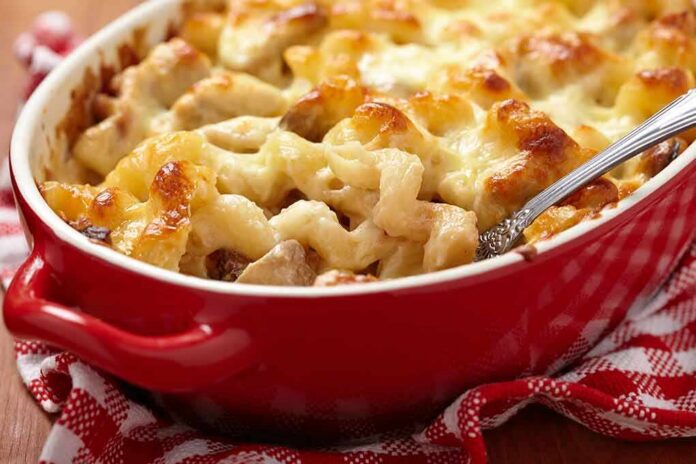
Eating a small protein snack right before bed does not make you fat, according to controlled research from a leading sports nutrition scientist.
Quick Take
- Dr. Michael Ormsbee’s studies found about 40 grams of protein-dominant food, under roughly 220 calories, eaten 30 minutes before sleep did not increase fat storage.
- The pre-bed snack did not change fat burning, lipolysis, or sleep quality in his controlled trials.
- Pre-sleep protein may boost overnight muscle repair and help people hit daily protein goals they’d otherwise miss.
- The findings apply narrowly to small protein snacks, not large meals or unrestricted late-night eating.
A Rule Everyone Believes, Now Tested in a Lab
For decades, the advice was simple: stop eating hours before bed or pay for it in body fat. Dr. Michael Ormsbee, a professor of nutrition and integrative physiology, decided to actually test that rule instead of repeating it. His research, discussed with performance scientist Dr. Andy Galpin, zeroes in on one specific scenario: a small, protein-heavy snack eaten shortly before sleep.
The recommendation Ormsbee repeats across interviews is precise. Eat about 40 grams of a protein-dominant food, keep it under roughly 220 calories, and eat it about 30 minutes before sleep. That precision matters. He is not arguing that any late-night eating is fine. He is describing a narrow, tested exposure that behaves differently than a heavy dinner at midnight.
What The Data Actually Showed
In his controlled work, a small calorie-light meal or protein shake did not make participants fatter. It also did not alter their fat burning or lipolysis, the process where the body breaks down stored fat for energy. Separate research using microdialysis in fat tissue found pre-sleep casein protein did not change overnight fat oxidation compared to a non-caloric placebo. That is a direct challenge to the blanket warning most people grew up hearing.
Ormsbee also points to muscle-building benefits. Working with researcher Luc van Loon’s lab, his team used muscle biopsies to show pre-sleep protein increased overnight muscle protein synthesis in both young and older adults. A 12-week training study by Snider and colleagues reported improved muscle size and strength with pre-sleep protein feeding, though critics note the groups may have differed in total daily protein intake, which muddies whether timing or quantity drove the gains.
Why This Isn’t A Green Light For Midnight Pizza
Ormsbee draws a hard line between his protein-dominant snack and a large mixed meal. The evidence covers the former, not the latter. He also stresses that the biggest practical benefit may be simple math. Most active adults need 1.6 to 2.2 grams of protein per kilogram of body weight daily, far above the standard 0.8 gram recommendation, and a lot of people fall short. A pre-bed snack becomes an easy extra window to close that gap.
Exercise also changes the picture. In overweight and obese women, minimal exercise over four weeks eliminated earlier glucose and insulin spikes that had been linked to pre-sleep protein feeding. That suggests activity level matters as much as what’s on the plate. Dr. Andy Galpin, discussing the same research separately, has echoed the core finding that a bolus of protein before bed does not compromise fat oxidation and can help people who otherwise struggle to hit their protein targets.
The Honest Gaps Still Worth Watching
None of this proves eating before bed improves long-term health outcomes like disease risk or lifespan. The studies measure things like fat oxidation, sleep quality, and muscle synthesis, not decades-long results. Much of the public-facing material also comes through summarized interviews and clips rather than full published methods, which makes independent verification harder for outside skeptics.
There’s also a real risk of the message getting flattened. Short video clips strip away the calorie ceiling and food-type conditions, turning a careful, conditional finding into what sounds like permission for any late-night eating. Competing advice, like the popular rule to stop eating three hours before bed, still dominates fitness media, so a nuanced exception can come across as contrarian even when the underlying science is narrower than the headline suggests.
The practical takeaway holds up regardless: a small, protein-focused snack under roughly 220 calories eaten half an hour before sleep appears to be a low-risk, potentially useful tool for people trying to build muscle or hit protein goals. It is not an excuse to raid the fridge for leftovers at midnight. Context, dose, and food type are doing all the work here, and that’s the detail worth remembering before quoting the headline.
Sources:
youtube.com, instagram.com, pinesnutrition.org, linkedin.com, sleep.me