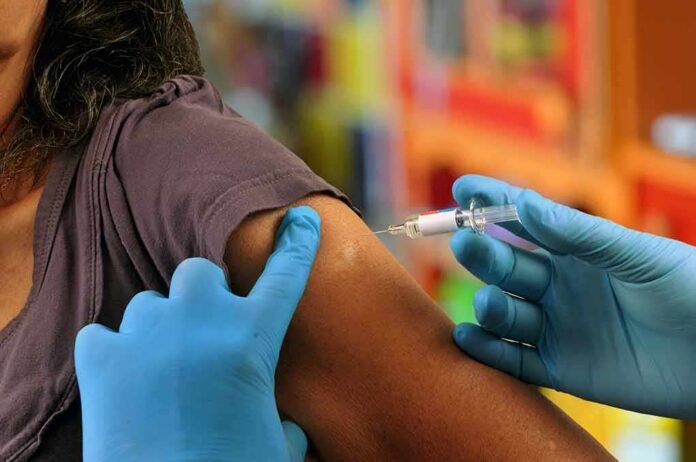
India just crossed a line in the dengue fight that cannot be easily uncrossed: it has moved from spraying mosquitoes to injecting children and adults with a live virus vaccine, on purpose.
Story Snapshot
- Drug Controller General of India approved Qdenga, the country’s first dengue vaccine, for ages 4–60.
- The vaccine uses a live but weakened dengue virus to protect against all four strains.
- World Health Organization guidance is narrower, which raises hard questions about India’s wider age range.
- India is betting that urgent dengue control needs outweigh past vaccine controversies and unknowns.
India’s first dengue vaccine and what exactly was approved
The Central Drugs Standard Control Organisation, under the Health Ministry, has granted market authorisation for Qdenga, a live, tetravalent dengue vaccine made by Takeda in Germany and imported by its India arm. This decision makes Qdenga the first licensed dengue vaccine in India, a country where the disease has surged over the last two decades. The approval allows its use in people from 4 to 60 years of age and covers both children and adults in cities and smaller towns alike.
The government describes this as a major step in moving from reactive dengue care to real prevention. Until now, the public playbook centered on mosquito control drives, hospital care, and seasonal warnings. Qdenga is built with weakened versions of all four dengue virus types, packaged to trigger immunity without causing full-blown disease. Takeda and Indian officials say the vaccine is meant to cut the risk of fever and hospitalisation, especially during intense outbreaks linked to heavy rains and urban crowding.
How Qdenga works and who is supposed to get it
Qdenga is a two-dose shot, 0.5 milliliters each, given three months apart. It uses a live but weakened dengue virus backbone to present all four serotypes of the virus to the immune system. The idea is simple: expose the body in a controlled way now, so it can fight off the real virus later, no matter which strain shows up. Trials and post-approval data in other countries suggest that it lowers the chance of severe disease and hospital stays more than it eliminates infection itself.
The Indian regulator went further than many expected. Qdenga can be given regardless of whether a person has had dengue before, and there is no requirement for pre-vaccination blood testing. The age band, 4–60 years, is also wide. The European Union approves Qdenga from age 4 upward, but the World Health Organization guidance favors routine use in children 6–16 in high transmission areas. India’s move, and the expert committee advice behind it, signal a choice to cover more of the population and to avoid complex screening programs that are hard to run at scale.
Global safety debates and the shadow of an earlier dengue vaccine
Dengue vaccines have a troubled history, and Qdenga now walks into that story. Sanofi’s Dengvaxia was once promoted as the breakthrough dengue shot but later showed higher hospitalisation risk in people who had never had dengue before, a pattern linked to antibody-dependent enhancement, where the wrong kind of antibodies make a later infection worse. That episode led to anger, political fallout, and tighter rules in several countries that still shape public trust around any new dengue vaccine today.
Qdenga’s data so far are more reassuring, especially in high transmission areas, but global health bodies still push cautious, step-by-step rollout. The World Health Organization backs its use in routine programs mainly for children 6–16 where dengue is common and where checking past infection is not practical. India’s decision to extend use up to age 60 and skip screening reflects a different risk balance: a heavy national dengue burden, rising case counts, and public hospitals that struggle under seasonal waves of patients. That urgency helps explain why regulators were willing to rely on multinational trial data and early real-world experience.
🦟 India gets its first approved Dengue vaccine! 🇮🇳💉#Qdenga (TAK-003) is now approved in India for individuals aged 4–60 years.
✅ Protects against all 4 dengue virus serotypes.
✅ 2-dose schedule mont
Remember: Vaccination complements—not replaces—mosquito bite prevention. pic.twitter.com/vF2JgfTN8x— Dr.Sachinkumar Chate (@chate_sachin) July 21, 2026
What this means next for families, doctors, and policy makers
For parents, the key point is simple: Qdenga will not erase dengue from India, but it may turn a dangerous disease into a milder one for many, especially children in high-risk cities. Doctors will have to weigh age, health status, and local outbreak patterns when advising patients, and they will watch closely for side effects once the vaccine reaches clinics. Policy makers must now decide how far to push public funding and whether to target hotspots or roll out more broadly over time.
The right path is neither blind fear nor blind faith. India has taken a serious step toward modern dengue control. That step should come with clear communication about benefits and limits, tough safety monitoring, respect for individual choice, and a willingness to adjust if future data demand it. A live virus shot for millions is not a minor tweak in policy; it is a new chapter, and someone needs to keep reading the fine print.
Sources:
insiderpaper.com, indianexpress.com, utkarsh.com, pharma.economictimes.indiatimes.com, medicaldialogues.in, youtube.com, business-standard.com, jogh.org, pmc.ncbi.nlm.nih.gov