Your daily workout routine might be sabotaging the very longevity benefits you’re chasing.
Quick Take
- Moderate exercise yields maximum longevity gains; excessive endurance training reverses cardiovascular benefits for adults over 45
- High-intensity runners logging over 4 hours weekly lose approximately 6 years of life expectancy gains compared to moderate exercisers
- Exercise variety—mixing walking, weights, and moderate cardio—delivers a 19% lower premature mortality risk independent of total volume
- Veteran endurance athletes face a 5-fold increased risk of atrial fibrillation, negating longevity protection seen with balanced activity
The Goldilocks Zone: Why More Exercise Isn’t Always Better
For decades, the fitness narrative was simple: more exercise equals longer life. Harvard researchers once calculated that every hour of exercise added two hours to your lifespan. That seductive math drove millions to marathons and ultramarathons. But emerging research from the Copenhagen City Heart Study and recent 2023–2025 epidemiological analyses reveals a troubling reversal. Excessive strenuous endurance training doesn’t extend longevity—it undermines it, particularly for adults over 45.
The mechanism is brutal. Ultra-endurance events trigger catecholamine surges, lactic acidosis, and sustained tachycardia that reduce coronary blood flow and accelerate atherosclerosis. Your heart, pushed beyond its evolutionary design, develops myocardial fibrosis—scarring that impairs function and increases arrhythmia risk. The World Health Organization recommends 150–300 minutes of moderate-intensity exercise or 75–150 minutes of vigorous activity weekly. Beyond that threshold, the data shows no additional lifespan benefit and mounting cardiovascular risk.
What makes this finding particularly jarring is that it contradicts decades of public health messaging. Fitness influencers, running clubs, and even some health organizations continue promoting the “no pain, no gain” ethos. Yet cardiologist James O’Keefe’s research demonstrates that the dose-response curve for exercise flips at extremes. Moderate runners gain 6 years of life expectancy. Those logging over 4 hours weekly of high-intensity running? They lose those gains entirely.
Variety Trumps Volume: The 19% Mortality Edge
Harvard Chan School researchers led by Yang Hu uncovered a counterintuitive solution: exercise variety, not volume, predicts longevity. A 2023 study revealed that mixing multiple activity types—brisk walking, resistance training, recreational sports—cuts premature mortality risk by 19%, independent of total exercise minutes. Vigorous walking alone delivers a 17% risk reduction. This finding demolishes the single-modality trap: the marathon runner who neglects strength work, or the weightlifter who avoids cardiovascular training.
The implication is profound. You don’t need to run ultramarathons or spend three hours daily in the gym. Thirty minutes of brisk walking combined with twice-weekly resistance training and occasional recreational activity yields maximum longevity benefits. This accessible formula explains why the longest-living populations globally—in Blue Zones—don’t obsess over exercise intensity. They walk, garden, and engage in varied daily movement. Their longevity reflects consistency and balance, not extremes.
The Atrial Fibrillation Paradox: When Athletes Face Higher Risk
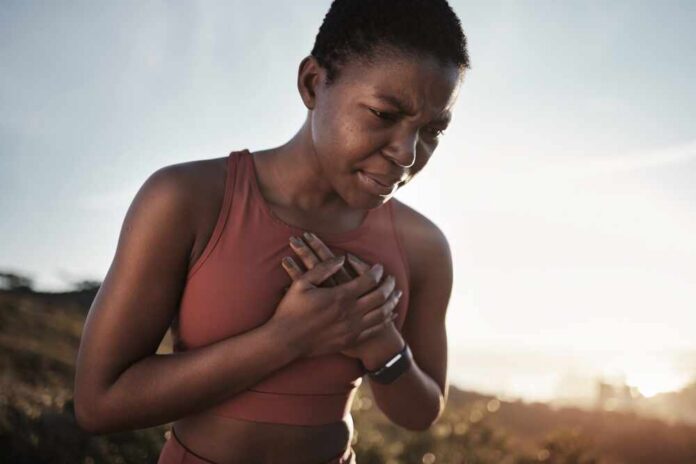
Veteran endurance athletes confront a startling reality: their hearts are at 5-fold higher risk for atrial fibrillation than sedentary individuals. This irregular heartbeat, often asymptomatic, increases stroke and heart failure risk. The mechanism involves chronic volume overload and oxidative stress from sustained high-intensity exertion. A 2024 twin study reinforced that intense physical activity doesn’t extend lifespan beyond WHO minimums and may accelerate biological aging through cardiovascular stress.
This doesn’t mean exercise is harmful. Rather, it means the relationship between activity and health follows a curve, not a straight line. The sedentary person gains massive benefits from becoming moderately active—roughly 1.6 to 2 years of life expectancy. The moderately active person gains additional years from consistency. But the extreme endurance athlete? They’ve crossed into a zone where further intensity inversely correlates with longevity. Their bodies age faster at the cellular level, according to emerging epigenetic research from 2025.
Redefining Fitness for the Second Half of Life
The fitness industry faces a reckoning. Hybrid apps and boutique studios increasingly market “balanced training” and “longevity fitness” rather than extreme endurance or ultra-high-intensity interval training. This shift reflects scientific consensus: the optimal exercise prescription resembles a Mediterranean diet approach—moderate, varied, sustainable, and culturally integrated. For adults over 45, the evidence is unequivocal.
Your daily workout matters profoundly for longevity. But the goal isn’t to maximize intensity or volume—it’s to sustain moderate, varied activity across your lifespan. The runner who replaces one weekly marathon training run with a strength session and adds recreational sports will likely outlive the marathoner logging 60 miles weekly. The hiker who occasionally swims and lifts weights beats the cyclist who rides five hours daily. Longevity doesn’t demand heroic effort; it demands intelligent balance.
Sources:
Extreme Endurance Exercise and Cardiovascular Health
Exercise Variety, Not Just Amount, Linked to Lower Risk of Premature Mortality
How Much Exercise is Needed to Live Longer
Exercise and Aging: Can You Walk Away From Father Time
Can Exercising Help You Live Longer: Twin Study Complicated
Exercise Routine Longevity and Variety
Can Too Much Exercise Accelerate Biological Aging